
Key Takeaways:
- For most crowns and Invisalign cases, a digital scan with our iTero Element scanner replaces the tray of putty.
- A 2023 meta-analysis on single crowns found fit from digital scans at least as good as fit from traditional impressions, with a small edge to digital.
- Traditional impressions still have a place in some cases, and I choose the method tooth by tooth.
If you’ve ever had a dental impression, you probably remember it. A tray full of cold putty, a few long minutes of biting down, and the urge to gag. For a lot of people, it’s the part of getting a crown they dread most.
That’s a big reason our office now uses an iTero Element scanner. When people ask me about digital scans vs traditional impressions, I answer in three parts: accuracy, comfort, and fit. Here’s how the two methods compare, and where the old putty tray still makes sense.
How Does a Traditional Impression Work?
A traditional impression is a physical mold of your teeth. Dentists make them with a soft putty, often alginate or polyvinyl siloxane (PVS), or with a digital scanner.
We fill a tray with impression material, press it over your teeth, and you keep still until it sets. That takes a few minutes. The tray can feel bulky, and it can trigger the gag reflex.
Once the material sets, we remove the tray and send it to the dental lab. The lab pours a stone model from the mold and builds your crown or appliance on that model. If the impression has a bubble, a drag mark, or a tear, we may need to take it again.
How Does a Digital Scan Work With Our iTero Element?
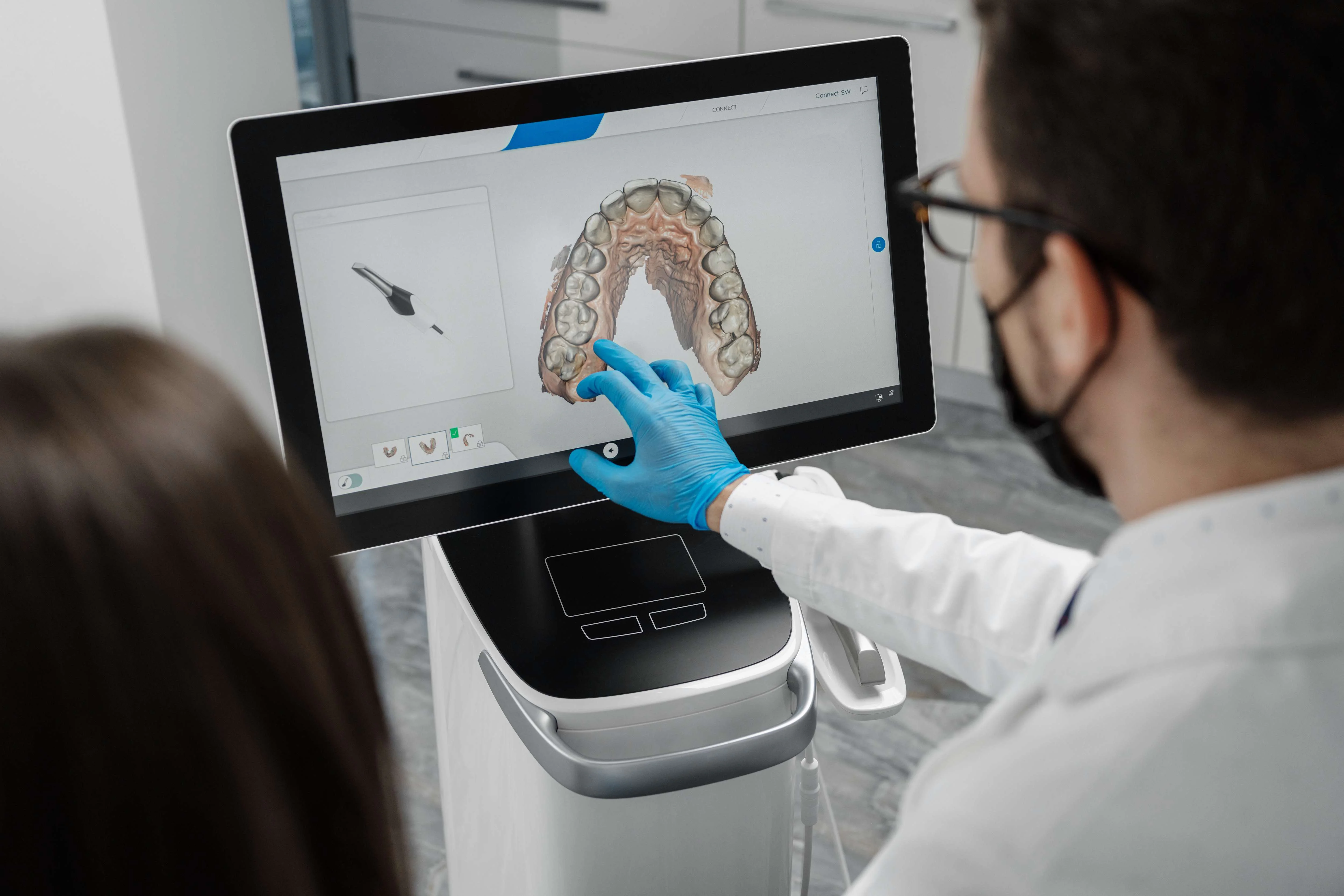
A digital scan replaces the putty with a small handheld wand. I move the wand along your teeth, and it captures thousands of images that the software stitches into a 3D model of your mouth. You can watch that model build on the screen in real time.
Align Technology, the maker of iTero, lists real-time visualization and a full-arch scan speed of about 60 seconds for its current Element systems. Align also states the scanners have scientifically proven clinical accuracy for restorative and orthodontic procedures.
When the scan is done, the file goes to the lab digitally. iTero has an open system that connects to dental labs and design software, so there’s no tray to ship and no stone model to pour at the start. We can also review the scan right away and rescan a small area if something is missing.
Curious about our other digital tools? My post on digital X-rays covers another technology that replaced an older film-based method.
Accuracy and Fit: What Does the Research Say?
Accuracy has two parts. Trueness is how close the scan is to your real teeth, and precision is how consistent repeated scans are. Fit is what you actually feel: how well the finished crown sits on the tooth and meets it at the edge, called the margin.
For single crowns, the studies look good. A 2023 systematic review compared ceramic crowns made from digital impressions with crowns made from conventional ones. The digital crowns showed slightly better marginal and internal fit, and the authors found the digital workflow produced a clinically acceptable fit. The difference between the two methods was small.
A 2015 laboratory study reached a similar conclusion: crowns made from digital impressions fit up to clinical standards.
One honest caveat: scanners differ. A 2021 comparison of ten intraoral scanners, including three iTero models, found that trueness varied between scanners and that accuracy dropped over longer distances, such as full-arch scans. Technique matters as much as the machine.
If you’re wondering whether a crown is in your future, here are the signs you may need a crown.
Comfort: Why Do Many Patients Prefer the Scan?
Ask people what changed and they’ll usually mention comfort first. You don’t bite into putty, you don’t hold a tray, and you don’t sit there waiting for anything to harden. Cleveland Clinic describes digital impressions as more comfortable, especially for people with a strong gag reflex.
The scan is also flexible. If you need to swallow, close your mouth, or take a break, we can pause and pick up where we left off. The process takes a few minutes, needs no anesthesia, and you may feel just slight pressure as the wand moves.
Digital Scans vs Traditional Impressions, Side by Side
Want the short version? Here it is, from the patient’s side of the chair.
| What you’ll notice | Traditional impression | Digital scan (iTero Element) |
|---|---|---|
| What goes in your mouth | A tray filled with putty | A small handheld wand |
| Time | A few minutes to set, per tray | A few minutes for the scan |
| Gag factor | Can trigger the gag reflex | Easier for most people with a strong gag reflex |
| Retakes | The whole impression is redone | Only the missing area is rescanned |
| How it reaches the lab | Physical mold, shipped | Digital file, sent electronically |
| Seeing your teeth | Not until a model is made | A 3D model on screen during the scan |
| Usually used for | Some deep margins and complex cases | Most crowns and Invisalign cases |
For most people, the scan is simply an easier appointment.
When Do Traditional Impressions Still Make Sense?
A scanner can only record what it can see. If the edge of a crown preparation sits deep under the gum, or the area is wet with saliva or blood, the scanner may not capture it cleanly unless we manage the tissue first.
Some long, full-arch cases also need extra care, since the research above shows accuracy drops over longer distances. In cases like that, I may go with a traditional impression or use both methods together.
What Should You Expect at Your Scan?
For dental crowns, we prepare the tooth first and then scan it, along with the opposing teeth and your bite. The lab uses that file to design the crown.
For Invisalign clear aligners, the scan is the starting point. Align states iTero works with the Invisalign system and the Invisalign Outcome Simulator, which shows a 3D model of your potential future smile. You’ll sit back, keep your mouth open, and we’ll scan your upper teeth, lower teeth, and bite.
FAQs
Are digital dental scans more accurate than traditional impressions?
For single crowns, the fit is at least as good. A 2023 meta-analysis of 10 clinical studies found no significant difference between the two methods, with a slight edge to digital on marginal and internal fit. Accuracy can drop on long full-arch scans and varies between scanners, so technique matters. Some deep-margin cases still call for a traditional impression.
How long does a digital dental scan take?
Most scans take a few minutes. Align lists a full-arch scan speed of about 60 seconds for its current Element systems, and its Invisalign guide says the whole process takes only a few minutes. Your appointment will run longer than the scan itself, since crowns need the tooth prepared first.
Does a digital scan hurt?
The scan doesn’t involve needles or numbing. Align’s Invisalign guide says no anaesthesia or preparation is needed, and you may feel slight pressure as the wand moves around your mouth. You can pause to swallow or rest. If the scan follows a crown preparation, that tooth will usually still be numb from the earlier step.
What are the downsides of digital impressions?
Scanners struggle with margins deep under the gum and with areas wet from saliva or blood, so the tissue sometimes needs managing first. Accuracy can also drop on long full-arch scans. Results depend on the scanner and the person using it. When a scan isn’t the right tool, I use a traditional impression instead.
Do I need a scan for Invisalign?
Invisalign treatment starts with a record of your teeth, and at our office that record comes from the iTero scanner. Align states iTero works with the Invisalign system and the Invisalign Outcome Simulator, so the scan feeds straight into planning your aligners. Ask us about your options at your consultation.
A Better Starting Point for Your Next Crown or Aligner
Digital scans have changed one of the least loved parts of dentistry. For most crowns and Invisalign cases, a scan is quicker to sit through, easier on a strong gag reflex, and backed by a 2023 meta-analysis that found crown fit at least as good as putty. When putty is the better call for your tooth, I’ll tell you why.
Getting started is easy. Request an appointment, we’ll look at your teeth and talk through the plan, and if a crown or Invisalign is the right next step, you’ll see your scan come together on screen.
Call today or book an appointment online.
4851 Cahaba River Road, Suite 101
Vestavia Hills, AL 35243
Dr. Stuart Curry